
Treating moss is almost always better than water blasting it. Blasting a coated roof strips the coating along with the growth, which shortens the life of the sheet and leaves it more prone to regrowth. A treatment kills the moss and lets it weather away, which is gentler and lasts longer.
Every spring, someone in the street hires a water blaster and spends a Saturday stripping the moss off their roof. It looks brilliant by mid afternoon. Here is the bit nobody sees.
What the moss is actually doing
Moss and lichen are not a cosmetic problem. They are a moisture problem.
Growth on a roof holds water against the surface long after the rest of it has dried. On a metal roof, that means the protective coating is permanently damp, and corrosion starts where the coating is weakest. On tile, the material itself stays saturated. Either way, the bits that break down first are the bits under the growth.
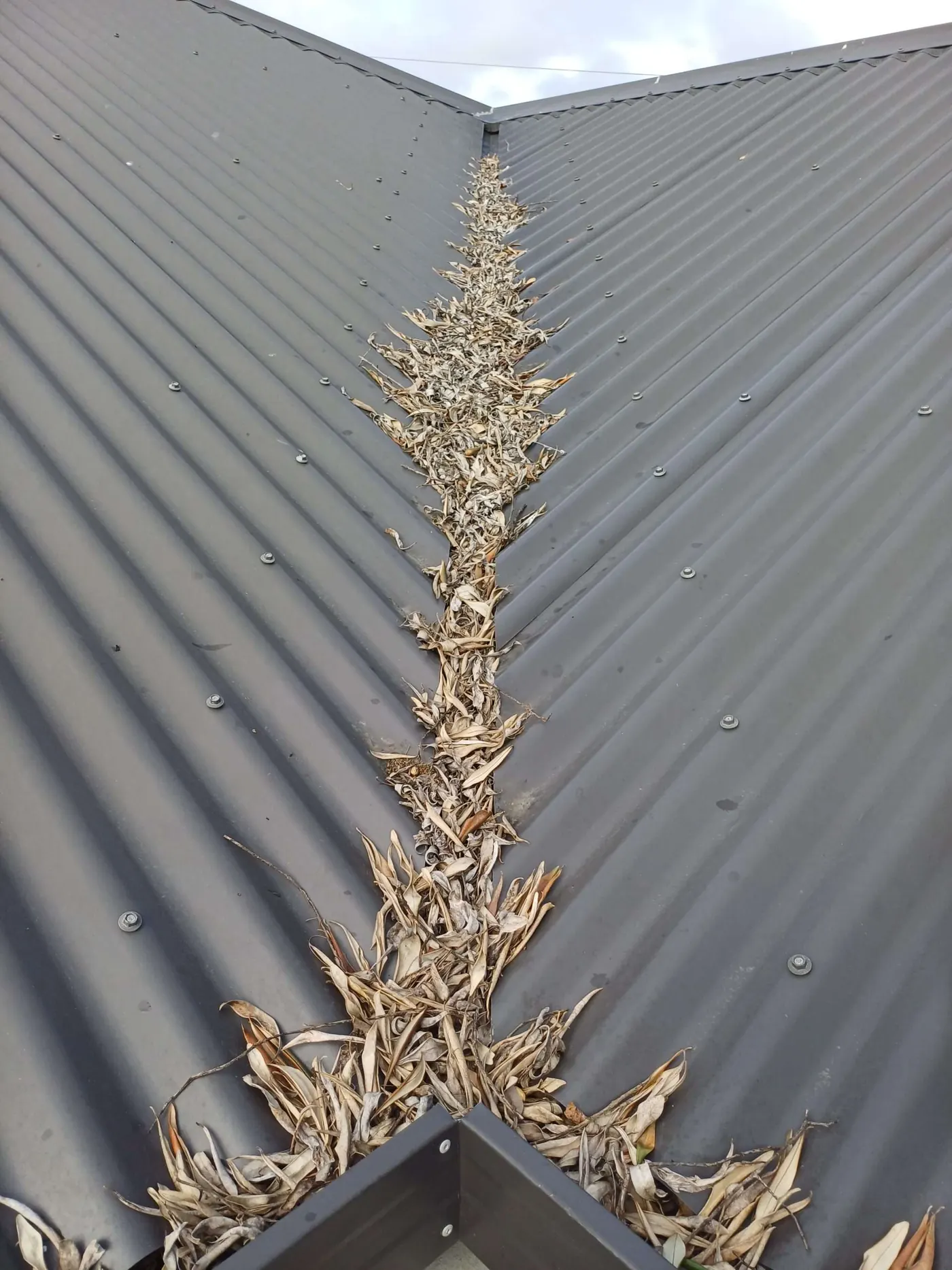
It also builds up. Moss sheds into valleys and gutters, where it packs down and stops water draining, which turns a roof problem into a gutter problem.
Why blasting is usually the wrong tool
A roof coating is thin and it is the only thing between the sheet and the weather. High pressure water does not distinguish between moss and coating. It takes both.
What you get is a roof that looks clean for one season and then:
- Regrows faster, because the surface is now rougher and holds moisture better
- Starts showing rust spotting where the coating has been stripped
- Reaches the point of needing painting or replacing years earlier than it should have
There is also the matter of what pressure does to fixings, flashings and ridge capping, none of which were designed to have water forced up underneath them.
What treating involves
A treatment kills the growth and then lets the weather clear it away over the following months. It is unglamorous, because nothing much happens on the day. That is the point.
The trade-off is honest enough to state plainly:
- Blasting gives an instant result and costs you roof life
- Treating is slow to look good and costs you nothing in roof life
If you are painting the roof anyway, then cleaning it down properly is part of the prep and that is a different conversation. If you just want the moss gone, treat it.
While someone is up there
Most of what goes wrong on a roof is cheap early and expensive late. If someone is already on the roof treating moss, it is worth having them check the things that actually cause leaks: fixings that have backed out, lifted sheets, ridge capping, flashings and blocked valleys.
That is the whole idea behind roof maintenance as a job rather than a reaction. It is an unavoidable cost of owning a house, and it is a much smaller one if you get to it first.