
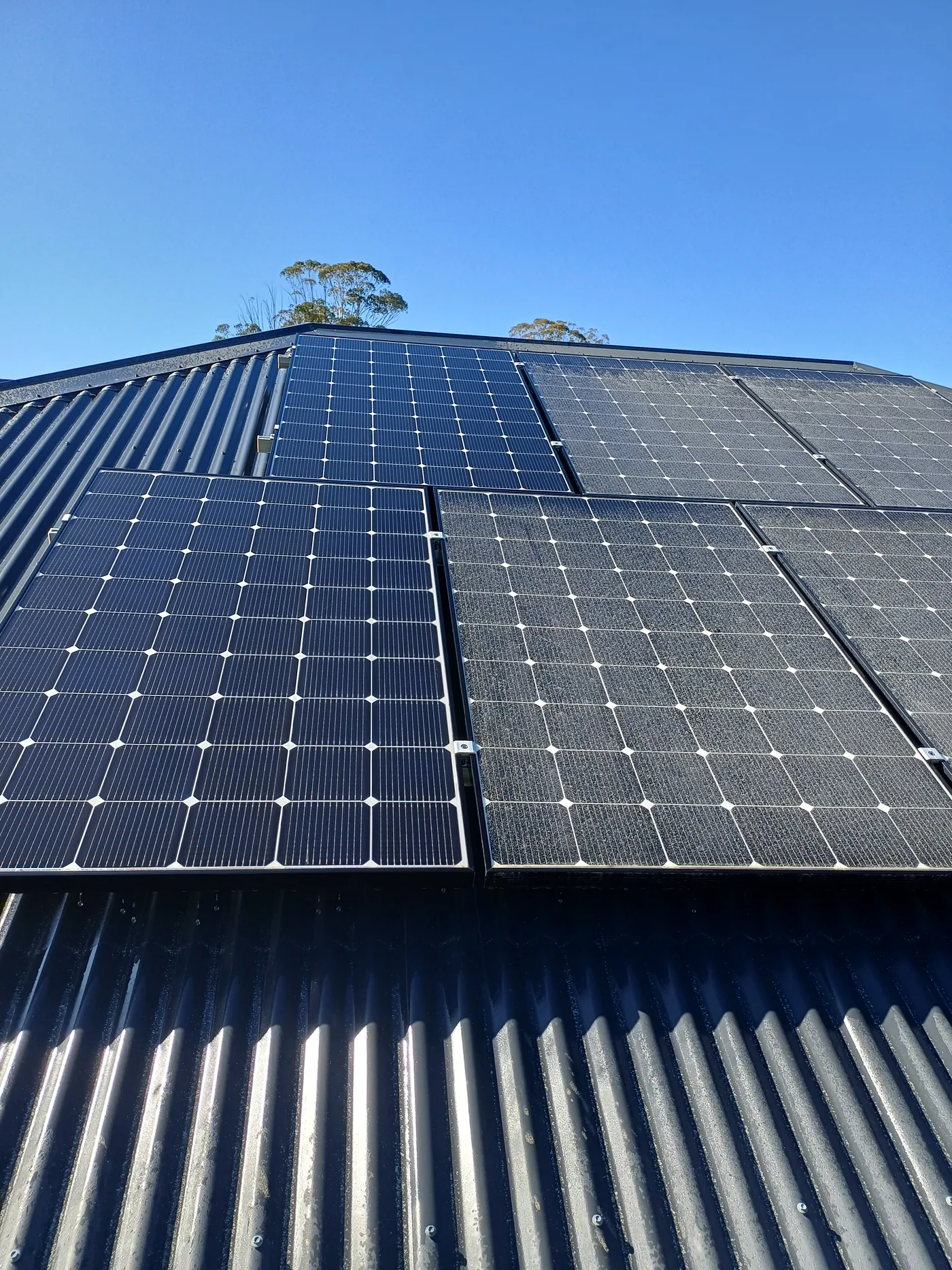
Cleaning solar panels does improve output, because anything sitting on the glass is shade and shade is lost generation. How much depends entirely on how dirty they are, so a fixed percentage is guesswork. Rain does not clean panels properly, it dries in place and leaves mineral streaking that keeps shading the cells.
Solar panel cleaning attracts some confident numbers. You will see claims of thirty percent gains quoted as if they apply to every roof. They do not, and the honest answer is more useful.
The short version
Anything sitting on the glass is shade, and shade is lost generation. Clean the glass and you get the generation back. How much you get back depends entirely on how dirty the panels were, which is why a fixed percentage is meaningless without looking at the specific roof.
Heavily soiled panels show an obvious difference. Panels that were already fairly clean show very little. Both are true.
Why rain does not do the job
This is the one that surprises people. Rain rinses loose dust off, and then it dries in place and leaves mineral deposits and tide marks behind. Those deposits keep shading the cells.
It is the main reason panels that look perfectly clean from the driveway are often doing less than their owner thinks. You are looking at them from below, at an angle, from thirty metres away.
What actually accumulates
- Dust, pollen and road grime, which form an even film across the whole array. This is the sneaky one, because there is nothing obvious to see.
- Bird droppings and leaves, which stick hard and block cells outright rather than just dimming them.
- Moss and lichen, which take hold in damp shaded corners, usually at the bottom edge of the frame, and cause long term damage if left.
- Mineral streaking, left as rainwater dries.
- Salt and dust, worse the closer you are to open ground or the coast.
How to tell if yours need doing
If you have monitoring, this is easy: compare a clear day this month against a clear day at the same time last year. A drift downwards with no other explanation usually means the glass.
Without monitoring, look at the bottom edge of the panels, which is where lichen and streaking show first, and take the view that once a year is sensible maintenance rather than a reaction.
Doing it safely
The reason to pay someone is almost never the cleaning. It is that it is roof work on a surface that is about to get wet, usually at height, often on a pitch. That is where the risk sits.
If you would rather not spend a Saturday on the roof, solar panel cleaning is a quick job and I will tell you straight afterwards whether yours actually needed it.